
How Many Units Do You Actually Need?
Start with headcount, not guesswork. OSHA 1926.51(c) sets the baseline for construction sites: one toilet for 20 workers or fewer, then one toilet and one urinal per 40 workers once you pass 20, dropping to one per 50 at 200 or more workers. Farms with hand-labor crews fall under a different rule, OSHA 1928.110, which calls for one facility per 20 employees within a quarter mile walk, a detail that matters for farm and agricultural restrooms around Longmont. Events run on a different math entirely, driven by guest count and how long the bar stays open. If you are still not sure where your job lands, the full breakdown lives at how many porta potties do I need, and the OSHA-specific version is at OSHA portable toilet requirements. A standard porta potty rental runs a 60 to 70 gallon holding tank and stands about 92 inches tall on a 44 by 48 inch footprint, so sketch out your site before the truck shows up.
What Type of Unit Should You Book?
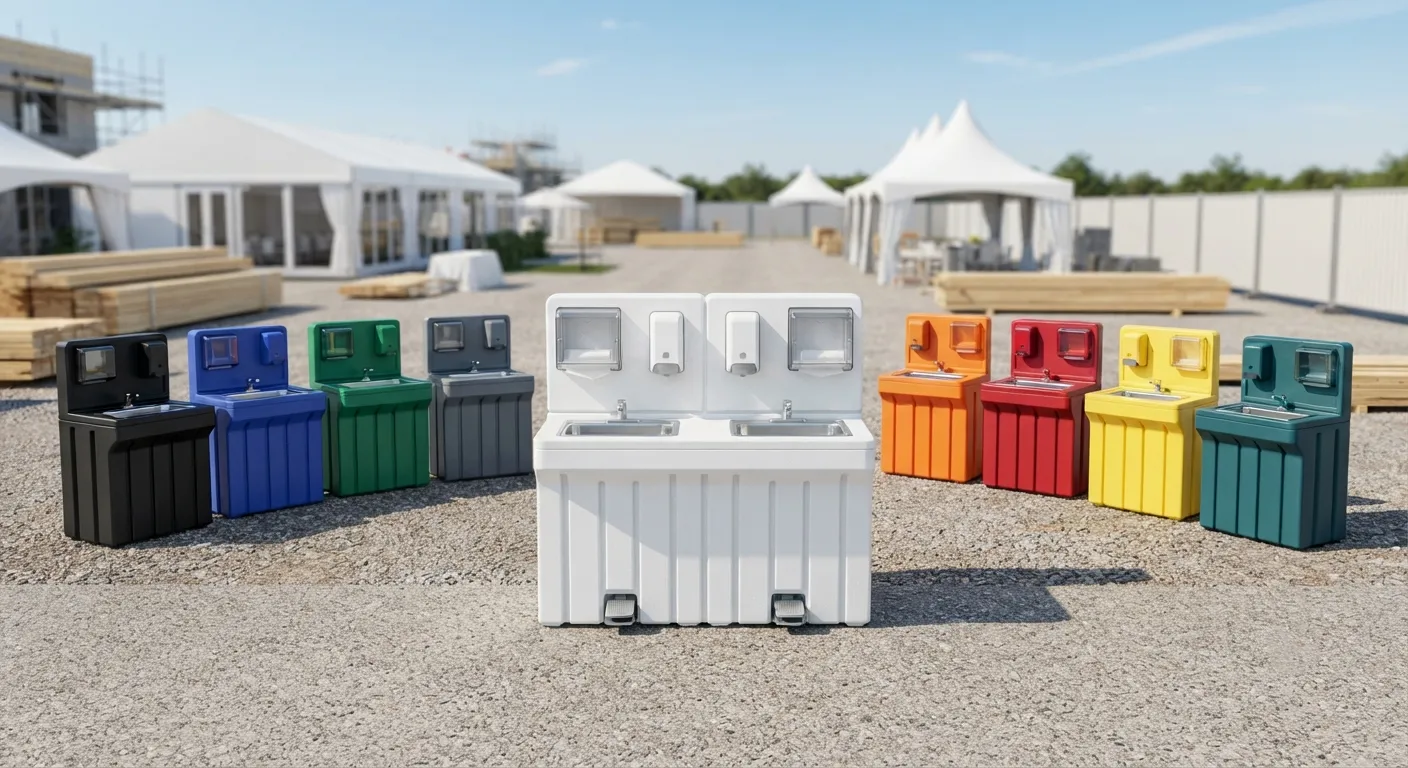
Match the unit to the job, not the other way around. A basic portable toilet rental covers most construction and cleanup work fine. Weddings and corporate events usually want a deluxe flushable porta potty with a real flush mechanism, and any Longmont event open to the public needs to plan for accessibility. ADA Standards section 213.2 requires that where single-user units are clustered, at least 5 percent are accessible, never fewer than one. An ADA accessible porta potty unit needs a 60 inch turning circle per ADA 304.3.1 and a clear route at least 36 inches wide per ADA 403.5.1, so factor that into your site layout early. For crews or guest counts over 40, a 2 stall restroom trailer or 4 stall restroom trailer beats lining up a row of single units. Larger festivals and multi-day builds sometimes need an 8 stall restroom trailer or a luxury restroom trailer for VIP areas. Job site crews doing painting or coating work also trigger OSHA 1926.51(f)(1), which requires washing facilities specifically for paints, coatings, herbicides or insecticides, so pair your toilet order with a handwashing station rental if that applies.
Where Should the Unit Go on Site?
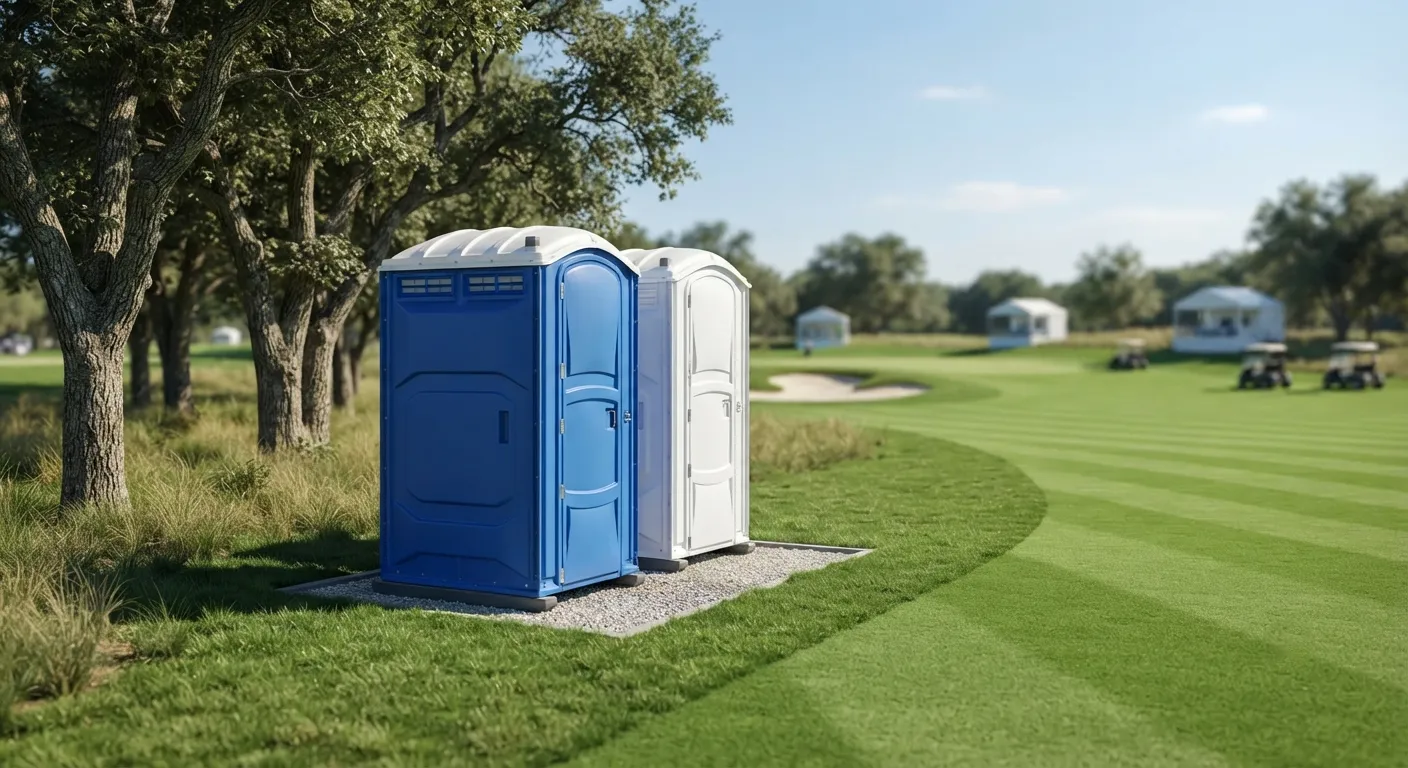
Placement decides whether your delivery truck can even reach the unit. Longmont sites with tight lot access should plan for a level, stable surface, since ADA 302.1 requires ground that is firm and slip resistant for any accessible unit. Door clearance matters too: ADA 404.2.3 sets a 32 inch minimum clear opening, so do not wedge a unit between a fence and a dumpster with no room to swing the door. If you are also renting a roll-off dumpster rental or a construction dumpster rental for the same job, remember the truck needs about 60 feet of straight clearance behind it to set the box down, and that clearance competes with your toilet placement on a small lot. Longmont sites near the right of way should confirm placement rules with the city before delivery, since that is not something to assume; see porta potty permit requirements and the general porta potty placement guide for what to check. If you are fencing the site too, coordinate your temporary fence rental layout with the toilet spot so nobody has to walk around a gate to reach it.
How Often Does the Unit Need Service?
Weekly service is the baseline, not the ceiling. ANSI/PSAI Z4.3, the industry sanitation standard, sets one service visit per week for up to 10 users over a 40 hour week as the default interval; busier sites or events need more frequent pumping. A standard unit rental in Longmont runs in the 100 to 350 dollar range per day depending on duration and demand, and weekly rentals land higher than daily but lower per-day than a single one-off booking, which is why longer jobs typically book by the week or month instead. Check current unit pricing at porta potty rental cost, the porta potty rental per day breakdown, or monthly porta potty rental if your project runs long. If a septic-connected building on the same property needs attention instead of a rental unit, a typical residential tank gets pumped every 3 to 5 years depending on tank size and household size; see septic pumping service or how often to pump a septic tank. Handwashing units need soap and towels or a hand-drying device under 29 CFR 1910.141(d)(2); hand sanitizer alone does not satisfy that rule, which matters for hand sanitizer station rental bookings that assume otherwise.
How far ahead should I book a porta potty in Longmont?
Book 7 to 10 days out for standard jobs and 3 to 4 weeks for weekend events, since deluxe and trailer units sell out first. Firestone sites 9.5 miles east and Loveland jobs 18.8 miles north run the same lead times. Rush orders are possible; see emergency porta potty rental.
Do I need a permit for a porta potty in Longmont?
It depends on placement. Units set fully on private property usually need no permit, but anything touching the public right of way needs confirming with the city directly. Check porta potty permit requirements before you finalize your site plan.
How much does a porta potty rental cost per day in Longmont?
Standard units run 100 to 350 dollars a day depending on rental length and unit type, with weekly and monthly rates costing less per day than a single-day booking. ADA units and deluxe flush units price higher. Full breakdowns sit at porta potty rental cost.
Can I put a porta potty on the street in front of my house?
Only with confirmation from the city first, since street and right-of-way placement is not something to assume. Driveways and yards on private property are usually simpler. See the porta potty placement guide for layout basics.
Does a construction site legally need a porta potty?
Yes. OSHA 1926.51(c) sets minimum toilet counts by crew size for construction sites, starting at one unit for 20 workers or fewer. Farms fall under the separate field sanitation rule, OSHA 1928.110. Details at OSHA portable toilet requirements.

Next step
Get a delivery date
Tell us the address, the dates and the headcount. We size the order and confirm the route.