
Why do porta potties smell?
The short answer: waste sitting too long in the tank without fresh deodorizer. Every standard porta potty rental has a 60 to 70 gallon holding tank, and once that fills past a certain point, gasses build up faster than the chemical can mask them. Heat speeds it up. A unit that sat fine in April can turn sour by July if the service interval doesn't change with it. ANSI/PSAI Z4.3, the industry standard for portable sanitation, sets a baseline of one service visit per week for up to 10 users across a 40 hour week. That's a floor, not a ceiling. A crew of 30 on a Longmont job site blows through that ratio fast, and OSHA 1926.51(c) sets the worker-to-toilet count that tells you how many units you actually need. More users per unit means more frequent pumping, whether that's a construction site or a weekend event rental. Placement matters too. A unit baking in direct sun all day works harder than one with afternoon shade, something worth thinking through on our porta potty placement guide.
Can you prevent porta potty odor?
Yes. Service frequency is the single biggest lever, followed by deodorizer type and placement. Renters who add a deluxe flushable porta potty tend to notice less odor than a standard unit under heavy use, since the flush mechanism moves waste into the tank instead of leaving residue on the bowl. For events with 200 or more expected guests, we lean on OSHA's 1926.51(c) ratio of one seat and one urinal per 50 workers as a planning guide, even though it's written for job sites, because it scales the same way for foot traffic. If you're not sure how many units your event or crew needs, the how many porta potties do I need guide walks through the math. Winter has its own smell profile. Cold slows bacterial breakdown, which actually helps, but freezing can crack tank seals if the unit isn't winterized right, covered in our porta potty in winter page. Whatever the season, a locked service schedule beats a reactive one every time.
| unit | day | week | month |
|---|---|---|---|
| standard | $100 - $350 | $130 - $500 | $125 - $325 |
| deluxe | $85 - $1200 | $150 - $290 | - |
| ada | $200 - $400 | $240 - $400 | - |
Pricing for Longmont rentals depends on unit type and how long you need it. See the full breakdown on porta potty rental cost or check monthly porta potty rental if you're planning a longer job.
Are ADA porta potties different when it comes to odor?
Not really, the tank and chemical work the same way, but the larger cabin gives odor more room to sit before it's noticeable. ADA Standards section 304.3.1 requires a 60 inch turning circle inside the unit, and section 404.2.3 sets a 32 inch minimum door opening, both of which mean more air volume than a standard cabin. That's not automatically worse for smell, just different. What matters more is the service interval and whether the unit sits in shade or full sun. If you're placing units for a public event in Longmont, ADA Standards 213.2 requires at least 5 percent of clustered units to be accessible, so you'll likely have at least one ADA accessible porta potty on site regardless. Ground surface matters here too. ADA 302.1 calls for stable, slip resistant footing, which also happens to keep waste and rinse water from pooling near the unit base, another small odor factor people don't think about until it's a problem.
Does location in Longmont affect how often service is needed?
Yes, mostly through weather and site access. A unit delivered to a shaded backyard in Longmont holds up longer between services than one sitting on hot asphalt at a downtown build site. Delivery logistics matter too: a roll-off dumpster rental truck or our service trucks need about 60 feet of straight clearance behind them to maneuver, so tight urban lots sometimes mean units get placed farther from the work zone, which can mean longer walks and heavier per-unit use. We run routes out to Firestone, 9.5 miles east, and up to Loveland, 18.8 miles north, and service intervals stay consistent across that whole radius. If your event or crew is near the Lafayette or Erie line, 12.5 and 13.3 miles south, we still hold to the same schedule. For agricultural sites, OSHA 1928.110 sets a field sanitation standard of one facility per 20 hand-labor employees, reachable within a quarter mile walk, which is worth knowing if you're running a farm and agricultural restroom setup outside the city core.
Do new porta potties smell right away?
No. A freshly deployed unit has clean deodorizer and an empty tank, so odor is minimal on day one. Smell builds with use and heat over the following days, which is why service timing matters more than the unit's age. Check porta john rental for unit options.
How often should a porta potty be serviced to control odor?
It depends on user count, but ANSI/PSAI Z4.3 sets a weekly baseline for up to 10 users. Busier sites need more frequent pumping. See how often are porta potties cleaned for the full schedule breakdown by use case.
Does hand sanitizer help with odor control?
No, hand sanitizer addresses germs on hands, not tank odor, and per 29 CFR 1910.141(d)(2) it doesn't even satisfy handwashing requirements on its own. For that you need soap and towels or a handwashing station rental alongside the toilet unit.
Do restroom trailers smell less than standard units?
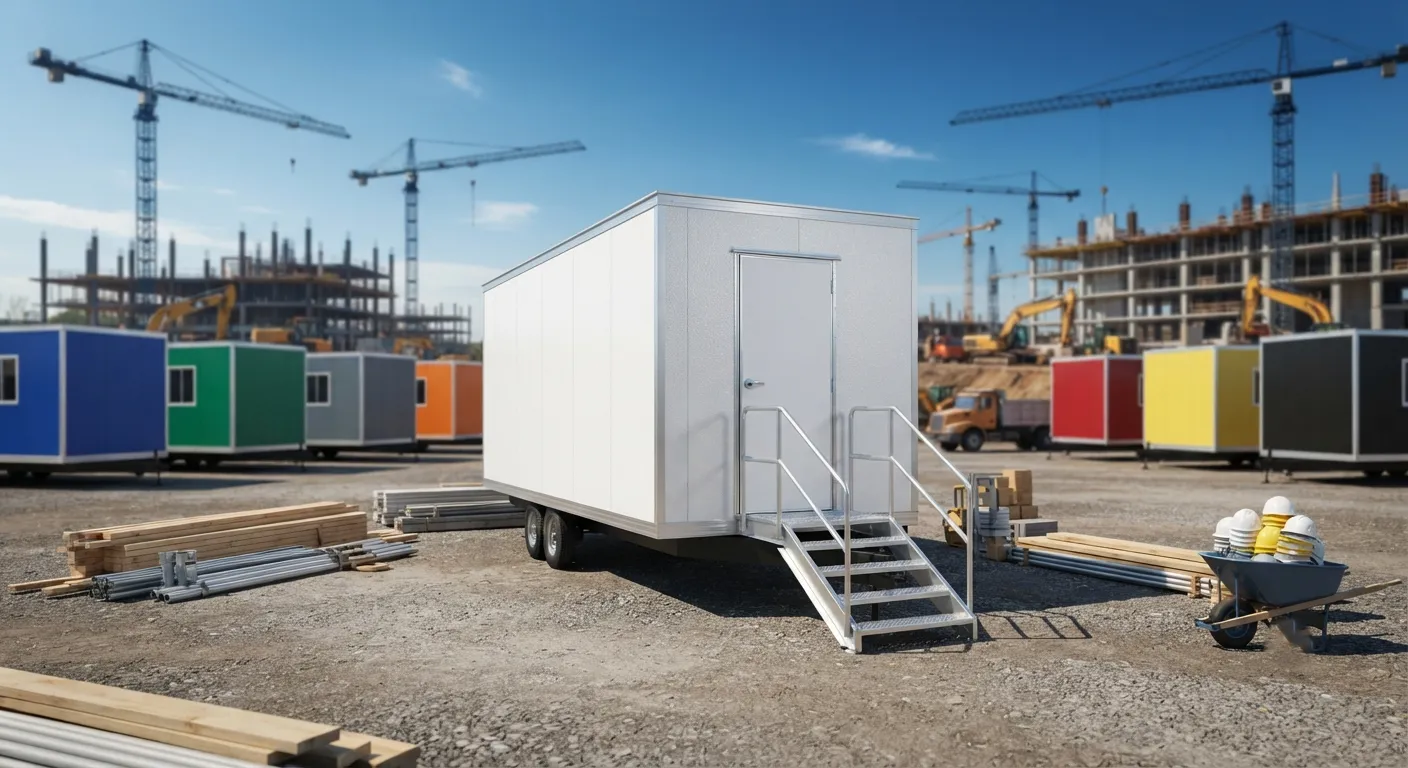
Generally yes, since trailers often include better ventilation and sometimes flush plumbing. A restroom trailer rental also handles higher guest counts without the odor buildup a single standard cabin faces under heavy traffic.
Can I request more frequent service if a unit starts to smell?
Yes. Call and we'll adjust the pumping schedule for that unit. This happens most on hot weeks or when guest counts run higher than planned. Reach out through contact or submit a request a quote for ongoing service adjustments.
Next step
Get a delivery date
Tell us the address, the dates and the headcount. We size the order and confirm the route.