
Where should a porta potty go on a job site or event?
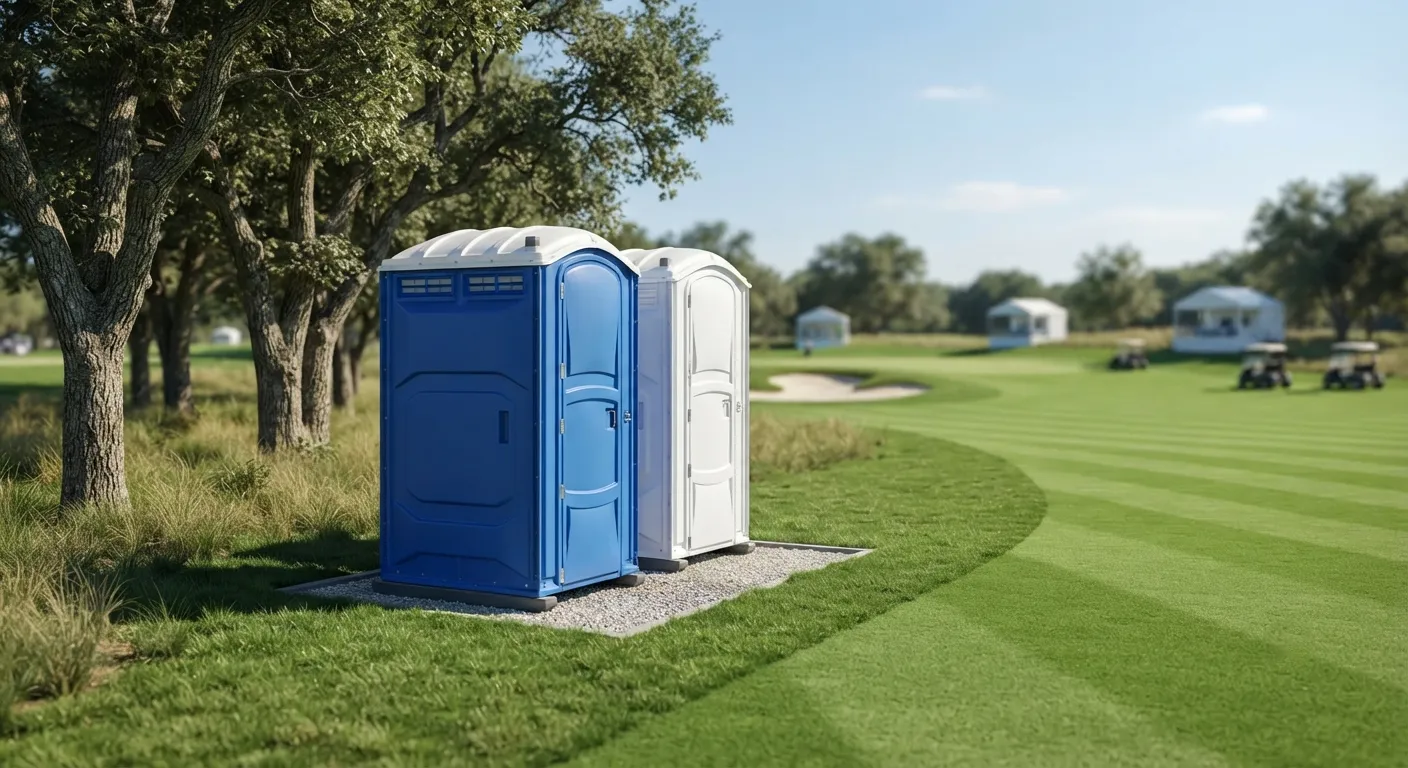
Start with the ground. A standard unit needs a flat, stable footprint about 44 by 48 inches, and it stands roughly 92 inches tall once it's set, so check for low branches or wires before you commit to a spot. ADA Standards section 302.1 calls for stable, firm, slip resistant surfaces, which rules out loose gravel or soft turf that shifts under the base. Keep units within a short walk of the work area but off the main traffic path, and leave the full 60 feet of straight clearance a roll-off dumpster rental or vacuum truck needs behind it, because the same pumper truck that services your toilets often needs that same lane. If you're running a construction site services job in Longmont, plan placement around where concrete trucks and skid steers move, not around convenience. For an event, walk the site the way a guest will and put units near the flow of foot traffic without blocking exits. Our porta potty placement guide philosophy is simple: pick the spot that stays accessible in mud, in a crowd, and after three weeks of weather, because a unit that gets blocked in is a unit nobody uses.
How many units and how far apart?
Distance from work matters more than most people think. Under OSHA 1926.51(c), a construction site needs 1 toilet for 20 workers or fewer, scaling up as crew size grows, and that ratio should guide both count and spacing on a Longmont build site. Spread units across the site rather than clustering them all at one gate, so nobody has to walk the length of the lot to reach one. If you're not sure how many you need for crew size or event headcount, the how many porta potties do i need guide breaks that down further, and the OSHA portable toilet requirements page covers the ratio in detail. For farm crews, OSHA 1928.110 sets a different standard: one facility per 20 hand-labor employees, reachable within a quarter mile walk, which matters for farm and agricultural restrooms spread across acreage outside Longmont. Service access matters just as much as headcount. ANSI/PSAI Z4.3 sets a baseline of one service visit per week for up to 10 users over a 40 hour week, so plan the layout with a truck lane in mind from day one, not after the first pump-out.
Can a porta potty be placed on the street or sidewalk in Longmont?
Placement in the public right of way needs confirming with the city before you set anything on a street or sidewalk in Longmont. We have not verified a specific Longmont ordinance number for this, so don't take a fee or rule from anyone who quotes one without checking. The same caution applies to a dumpster placement permit: dumpster placement permit cost and requirements vary by jurisdiction, and our dumpster permit requirements page walks through what to ask the city rather than guessing. If your project also needs a roll-off, check dumpster sizes and dimensions against your driveway or lot before delivery day, since a 30 or 40 yard box needs the same straight-line clearance a service truck does. When in doubt, keep everything on private property or a permitted lot until the city confirms otherwise, and loop in temporary fence rental if you need to secure the placement area from foot traffic while permits get sorted.
Does placement change for ADA-accessible units?
Yes, and the rules are specific. Where single-user portable units are clustered, ADA Standards section 213.2 requires that at least 5 percent be accessible, with a minimum of one unit no matter how small the cluster. That accessible unit needs a clear route at least 36 inches wide under ADA Standards section 403.5.1, a door opening of at least 32 inches per section 404.2.3, and enough room inside or beside it for a 60 inch turning circle under section 304.3.1. Ramp slope, if one is needed to reach the pad, cannot exceed 1:12 per section 405.2. Our ADA accessible porta potty page has the full spec list, and the general ADA restroom requirements guide covers reach ranges and operable parts under section 309.4 and 308.2.1. Place the accessible unit on the same stable, level ground required for standard units, not tucked behind them where the route gets blocked.
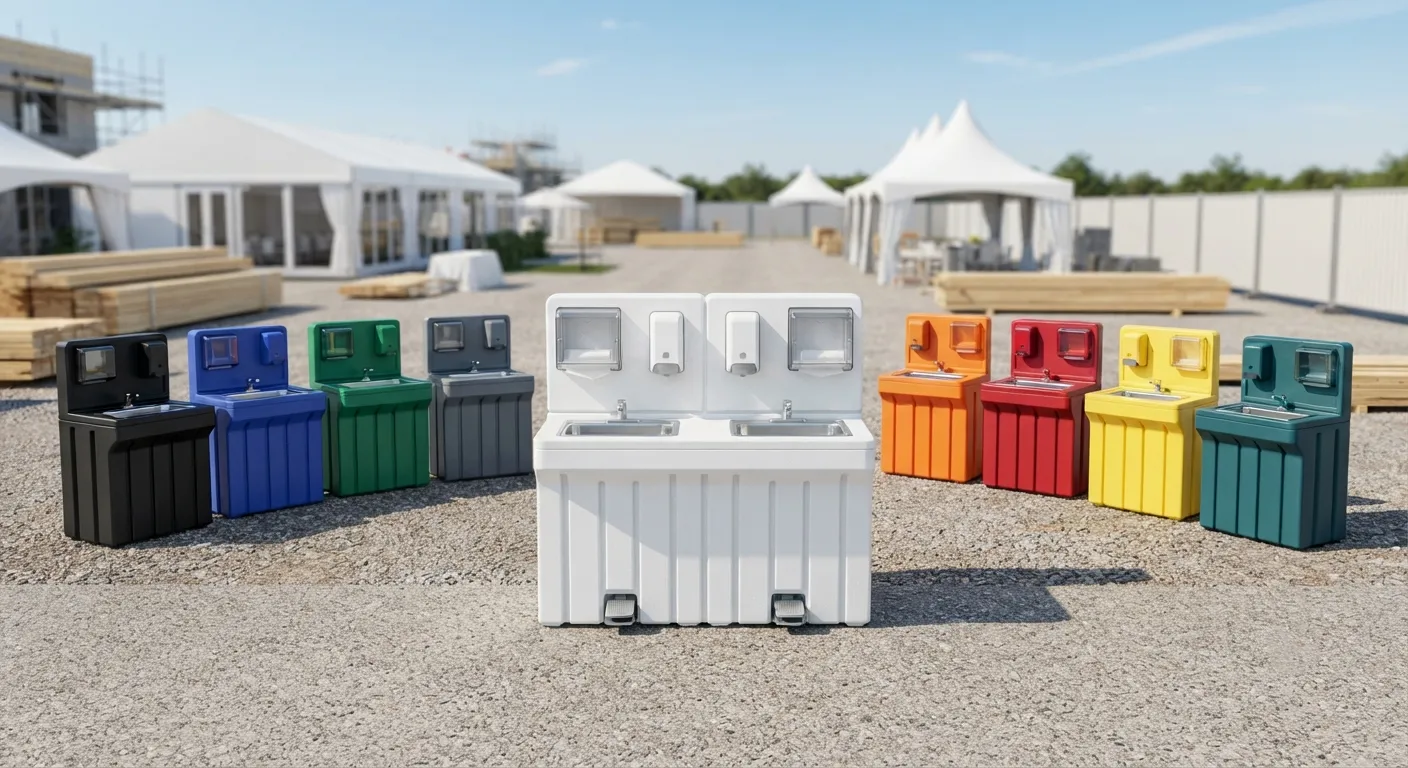
Placement questions come up constantly around other equipment too. Someone running a handwashing station rental setup asks about an ozark river portable sink replacement parts source when a foot pump or spigot breaks mid-job, and OSHA 1926.51(f)(1) requires washing facilities specifically where workers apply paints, coatings, herbicides or insecticides, so pair a working sink with those tasks. A mobile office trailer rental on the same lot has its own wear issues, and mobile office trailer replacement doors come up often enough that it's worth checking a rental unit's hardware before signing. And if you're coordinating septic work at the same time, note that a placerville septic pumping service search usually means someone typed the wrong town. Our septic pumping service covers Longmont directly.
How far from the work area should a porta potty sit?
Close enough that workers actually use it, far enough that it's out of the main traffic lane. A short, direct walk beats a long one every time, and OSHA 1926.51(c) uses crew size, not distance, to set the required count.
What kind of ground does a unit need?
Flat, firm, and stable, per ADA Standards 302.1. Avoid soft grass, deep gravel, or slopes. A 44 by 48 inch footprint on solid ground keeps the unit from tipping or sinking after rain.
Do I need a permit to place a porta potty in Longmont?
Maybe, especially in the right of way. That placement needs confirming with the city directly since we have not verified a specific fee or ordinance. Keep units on private property until you know for sure.
How much clearance does the service truck need?
About 60 feet of straight, unobstructed space behind the unit for the pump-out truck to park and work. Plan your layout around that lane before delivery, not after.
Can I move a rented unit myself after delivery?
Ask your provider first. Longmont Porta Pros can usually reposition a unit during a scheduled service, but moving it yourself risks tipping a full tank or blocking the next service visit.

Next step
Get a delivery date
Tell us the address, the dates and the headcount. We size the order and confirm the route.