
How Do Porta Potties Work?
The basics are simple. Waste goes into a holding tank below the seat, and a chemical packet in that tank does two jobs: breaks down solids and knocks back the smell. A standard unit sits about 44 by 48 inches on the ground and stands roughly 92 inches tall, so it fits tight jobsite corners without eating much space. There is no water line and no sewer connection. Ventilation pipes vent gas up and out the roof vent instead of into the stall. For a construction worker running to a porta potty between pours, the whole point is speed: step in, use it, step out, no wait on plumbing. Service techs come on a set interval, pump the tank, hose the interior, and restock supplies. Standard porta potty rental covers most jobsites and yards. If you are trying to figure out how many you actually need for a crew size, the how many porta potties do I need guide walks through the math, and OSHA portable toilet requirements breaks down the ratio rules.
How Do Flushable Porta Potties Work?
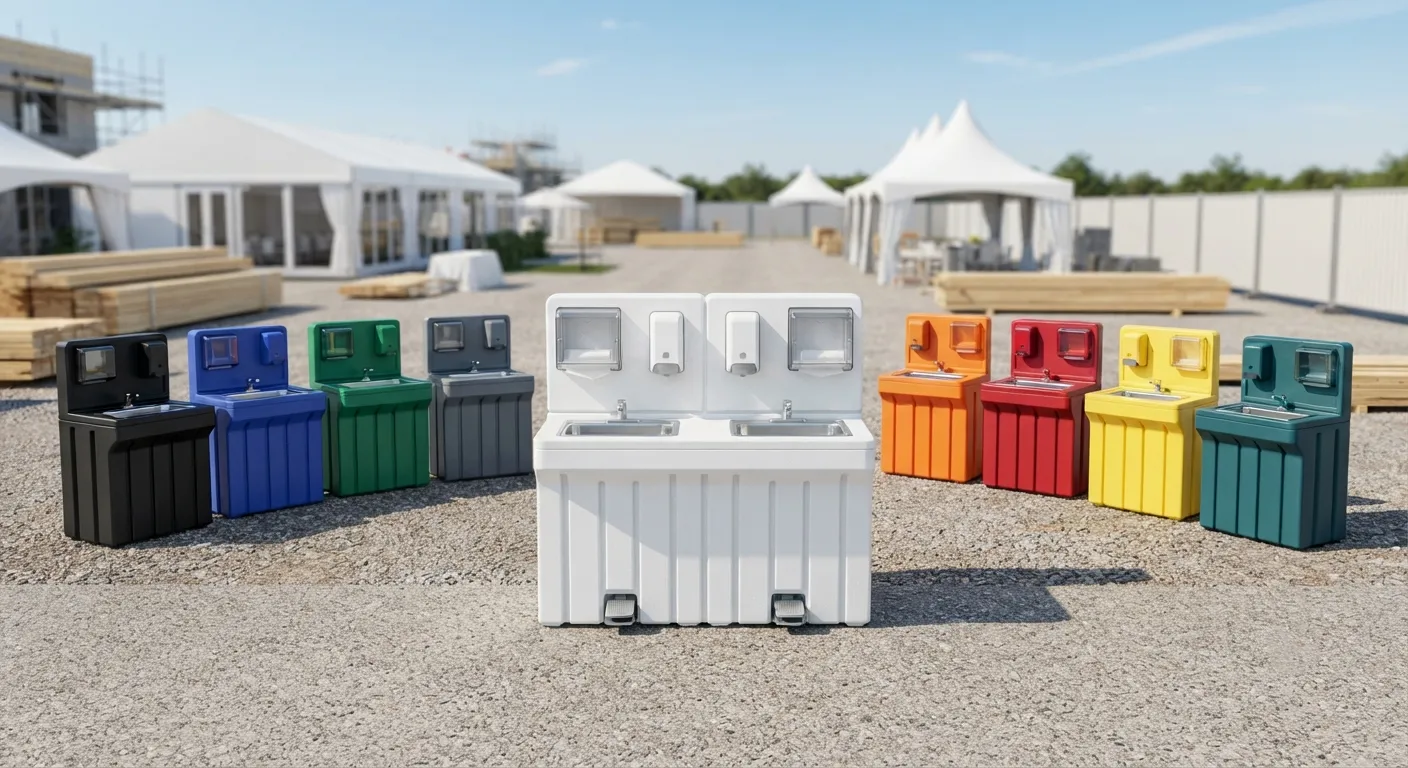
A flushable, or deluxe, unit adds a small onboard freshwater tank and a foot pump or hand pump that pushes a rinse of water into the bowl after each use. That water carries waste down into the same kind of holding tank a standard unit uses, just with a rinse cycle on top. It is not tied to a home sewer line, so it still needs the same pump-out service. These units also usually add a sink basin fed by that same freshwater reservoir, which is closer to how a portable sink works: a small tank feeds the faucet, gray water drains into a separate holding tank underneath, and nothing connects to a building's plumbing. Deluxe flushable porta potty rentals get requested most for weddings, backyard renovation crews, and events where guests expect something closer to a real bathroom. Pricing for a deluxe unit runs from around 85 dollars a day up to 300 for a standard day rate, and roughly 150 to 290 for a full week, depending on features. For events that need more than one or two units, an event restroom rental setup or a restroom trailer rental scales better than stacking single stalls.
How Do Camping Porta Potties Work?
Camping units follow the same core idea, just smaller and often carried in. A camp toilet is typically a compact tank-on-tank design: a waste holding tank on the bottom, a seat and bowl on top, and a small water tank for a flush if it has one. No chemicals are strictly required, but a mild holding-tank treatment cuts smell fast on a multi-day trip. Rental-grade camping porta potty units used for group trips or hunting camps are closer to standard portable toilets, just placed farther from a road, so delivery access matters. A roll-off delivery needs about 60 feet of straight clearance behind the truck, and that same clearance rule applies to placing a portable toilet in a remote spot: the truck still has to back in and set it down cleanly. If you are staging a farm, ranch, or agricultural crew instead of a campsite, farm and agricultural restrooms covers that use case directly, and OSHA field sanitation rules for hand-labor employees, 1928.110, call for one facility per 20 workers within a quarter mile walk.
What Chemicals Go In a Porta Potty?
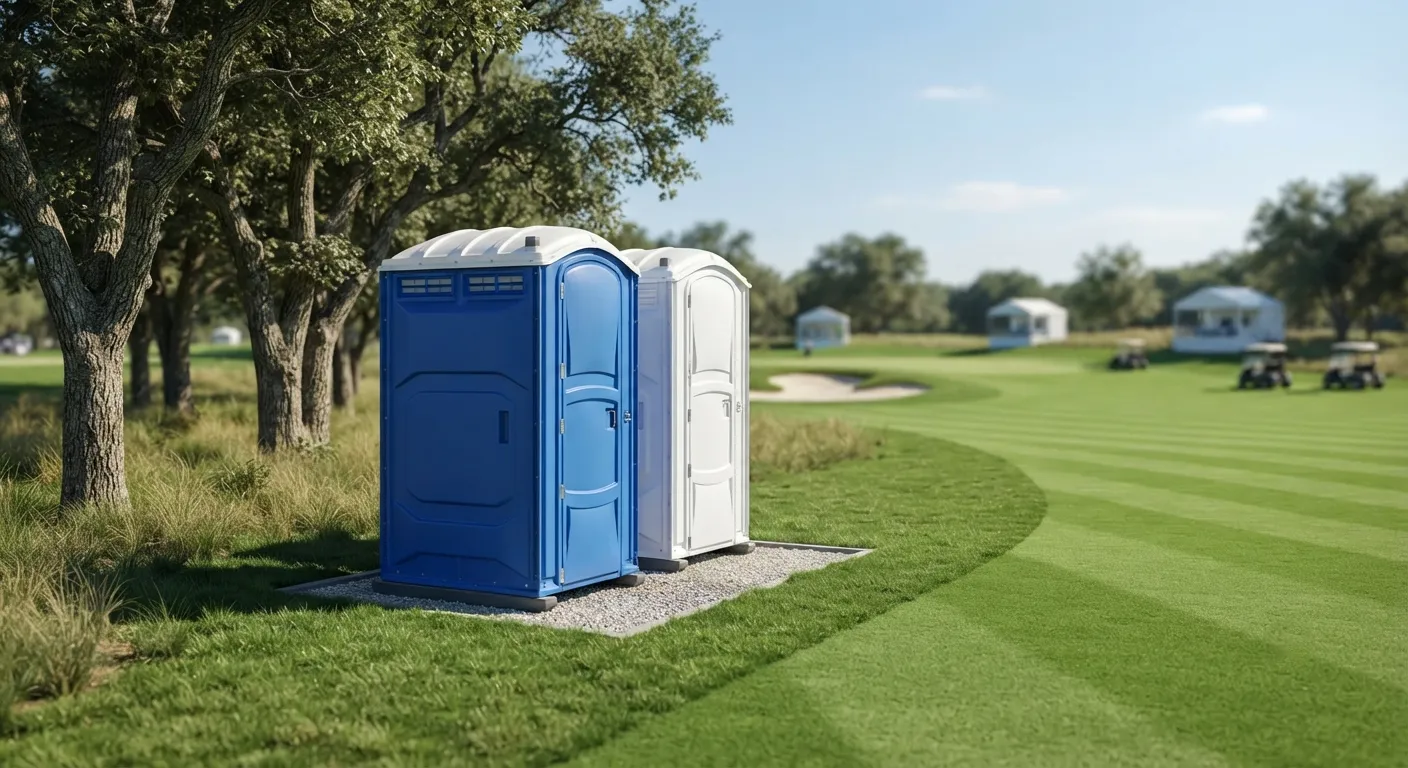
Porta potty chemical treatments are blue or green liquid or packet formulas built to break down solid waste, suppress odor, and keep the tank from foaming during transport and pump-out. Techs load it fresh at every service stop, so the tank never sits untreated for long. Anyone searching "portable toilet chemicals near me" is usually a renter refilling between scheduled visits, but on a rented unit from Longmont Porta Pros, that refill is built into the service, not something you buy separately. The baseline service interval under ANSI/PSAI Z4.3 is one visit a week for up to 10 users over a 40 hour week, which is why most Longmont jobsites land on weekly service by default. Heavier-use events or larger crews need more frequent stops. For general sanitation counts on a jobsite, OSHA 1926.51(c) sets the ratio: one toilet for 20 workers or fewer, scaling up from there. Curious what a rental actually runs? The porta potty rental cost page and porta potty rental per day breakdown both cover current pricing bands.
| unit | day | week | month |
|---|---|---|---|
| standard | 100-350 | 130-500 | 125-325 |
| deluxe | 85-1200 | 150-290 | - |
| ada | 200-400 | 120-240 | - |
Do porta potties need a sewer connection?
No. A porta potty is fully self-contained, holding waste in an onboard tank until a service truck pumps it out. That is why portable restroom rental works on raw land, empty lots, and jobsites with no utilities run yet.
How often does a porta potty get serviced?
Weekly is the standard baseline under ANSI/PSAI Z4.3 for up to 10 users. Busier sites or events need two or three visits a week. Check how often are porta potties cleaned for detail on what a service visit covers.
Do porta potties smell?
They can, especially in heat or with low service frequency, but chemical treatment and regular pump-outs keep odor down. Do porta potties smell covers what actually drives smell and how to avoid it.
Can a porta potty be ADA accessible?
Yes. ADA-compliant units include a 60 inch turning circle under ADA Standards 304.3.1 and a 32 inch minimum door opening under 404.2.3. See ADA accessible porta potty for specs and placement.
What is the difference between a porta potty and a septic tank?
A porta potty is a portable, self-contained tank serviced on-site. A septic tank is a buried, permanent system typically pumped every 3 to 5 years. Compare setups on septic pumping service if you are weighing a fixed system instead.
Next step
Get a delivery date
Tell us the address, the dates and the headcount. We size the order and confirm the route.